


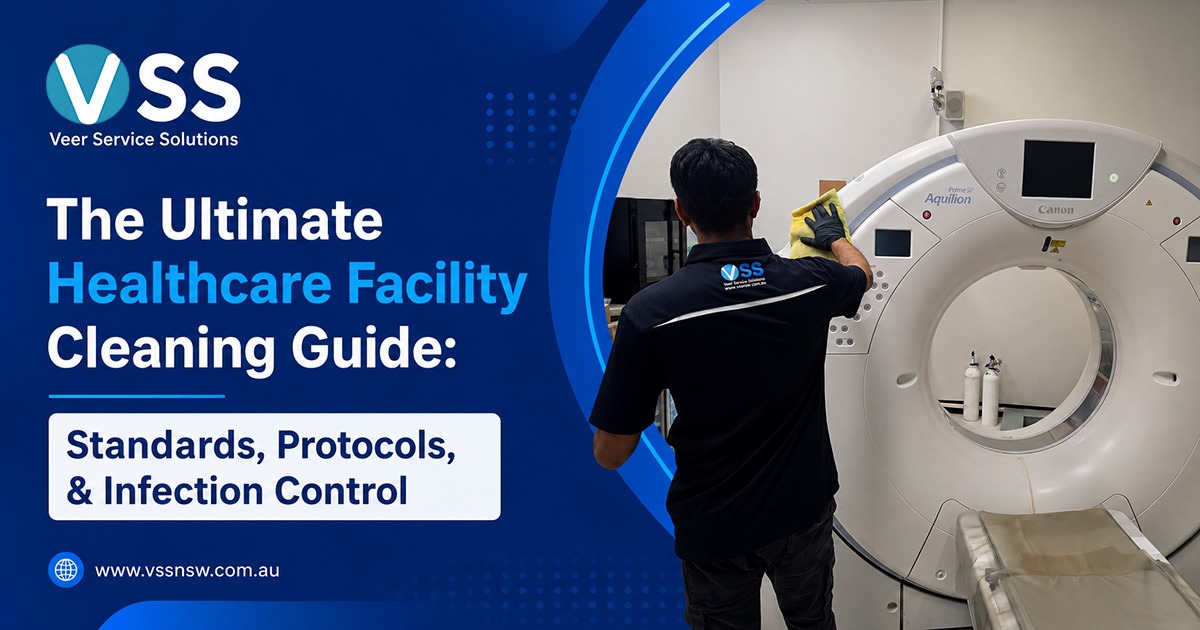
In a clinical environment, environmental cleanliness is not a matter of cosmetics—it is a critical component of patient care and clinical safety. Unlike standard commercial spaces, healthcare facilities operate under strict regulatory oversight, where inadequate sanitisation directly correlates with the proliferation of Healthcare-Associated Infections (HAIs).
Pathogens such as Methicillin-Resistant Staphylococcus aureus (MRSA), Clostridioides difficile (C. diff), and norovirus can survive on inert surfaces for weeks, if not months. To protect vulnerable patients, safeguard clinical staff, and maintain compliance with the National Safety and Quality Health Service (NSQHS) Standards and RACGP guidelines, facilities must implement a rigorous, science-based decontamination framework.
This comprehensive guide breaks down the essential protocols, risk matrices, and operational workflows required to maintain an uncompromised healthcare environment.
1. Risk Stratification & Clinical Zoning
An efficient environmental cleaning program does not treat every square metre of a facility equally. Resources must be deployed dynamically based on the clinical risk level of each zone. By categorising areas according to the vulnerability of the patients treated there and the likelihood of contamination, facilities can optimise their infection control outcomes.
The image above highlights how medical clinics map their floorplans into operational risk categories. To operationalise this framework, facilities typically use a three-tier risk stratification matrix:
| Risk Classification | Functional Facility Areas | Required Cleaning Frequency | Primary Objective |
| High-Risk Zones | Operating theatres, treatment rooms, isolation units, minor surgery suites, clinical waste storage. | After every patient encounter or case; minimum twice daily + deep terminal clean. | Complete pathogen eradication, bio-burden minimisation, and sterility preservation. |
| Medium-Risk Zones | General consulting rooms, patient waiting areas, public washrooms, triage desks. | Minimum daily cleaning; high-touch disinfection multiple times throughout the day. | Breaking transmission pathways across shared public-clinical interfaces. |
| Low-Risk Zones | Administrative offices, staff breakrooms, corridors, medical records storage archives. | Scheduled daily or periodic cleaning based on occupancy traffic. | Routine soil removal, allergen control, and baseline hygiene maintenance. |
2. High-Touch Surface Vectoring: Defeating the Biofilm
Pathogens do not deposit uniformly across clinical spaces; they pool heavily on high-touch surfaces (HTSs). These surfaces act as transmission vectors—a doctor touches an infected patient, adjusts an examination light, and transfers the pathogen to the next three surfaces they touch.
Furthermore, bacteria left undisturbed on these surfaces build biofilms—complex, slimy matrices of extracellular polymeric substances that protect microscopic colonies from standard surface wipes. Defeating these requires a two-step chemical attack or a verified therapeutic-grade 2-in-1 formulation that breaks the organic soil down mechanically before executing its biocidal kill mechanism.
Critical Healthcare High-Touch Areas:
- Patient Examination Zones: Examination tables, adjustable armrests, privacy curtain tracks, pull-handles, and bolster cushions.
- Diagnostic & Clinical Equipment: IV poles, blood pressure cuffs, pulse oximeter monitors, ultrasound probes, and diagnostic touchscreens.
- Architectural Touchpoints: Doorknobs, push-plates, sink taps, hand sanitizer dispensers, light switches, and window levers.
- Administrative Interfaces: Reception keyboards, check-in kiosks, shared pens, and telephone handsets.
3. Standard Operational Workflows (SOPs) for Clinical Decontamination
To ensure consistency and eliminate cross-contamination, environmental service technicians must follow a strict spatial flow: clean to dirty, and top to bottom. Clean areas must never be contaminated by cloths or mops used in high-risk zones, which is why Australian health frameworks mandate a strict color-coding protocol (e.g., Red for sanitary areas, Blue for general clinical zones, Yellow for infectious isolation units).
The following sequence details the precise mechanical process required for high-standard clinical room decontamination:
1.Don Task-Specific PPE & Conduct Hand Hygiene:Step 1: Prerequisite Safety.
Perform hand hygiene with an alcohol-based hand rub (60-80% v/v ethanol). Don clinical-grade Personal Protective Equipment (PPE) including heavy-duty gloves, a fluid-resistant apron, and protective eyewear if chemical splashing or bio-fluid contact is possible.
2.Waste Segregation and Preliminary De-cluttering:Step 2: Containment.
Safely bag and remove general waste and regulated clinical/biohazard waste. Carefully strip linens from examination tables without shaking them to prevent generating infectious aerosols, and place them directly into soluble laundry bags.
3.Mechanical Pre-Cleaning (Detergent Wash):Step 3: Soil Removal.
Apply a neutral detergent solution to vertical and horizontal surfaces using microfibre cloths. Wipe in an “S” pattern path to avoid re-depositing soil onto previously cleaned sections. Work from the highest physical surfaces (shelving) down to the lowest.
4.Chemical Disinfection & Contact Time Management:Step 4: Pathogen Eradication.
Apply a Therapeutic Goods Administration (TGA)-registered hospital-grade disinfectant to all high-touch surfaces. Ensure the surface remains visibly wet for the full manufacturer-specified “contact time” (the duration required for the chemical to disrupt viral or bacterial cell walls).
5.Floor Re-Sanitisation & Exit Protocol:Step 5: Final Zone Clearing.
Mop the floor using a dual-bucket system or clean microfiber flat-mop heads, starting from the furthest rear corner and working backward toward the doorway. Doff PPE safely using aseptic techniques, discard single-use items, perform final hand hygiene, and sign off on the facility compliance log.
4. Chemical Selection & Regulatory Compliance
In Australia, you cannot simply use domestic or standard commercial disinfectants in a healthcare environment. The Therapeutic Goods Administration (TGA) strictly regulates chemical formulations used in medical settings.
When establishing your cleaning protocols, look for products listed on the Australian Register of Therapeutic Goods (ARTG) explicitly classified as Hospital-Grade Disinfectants.
Evaluating Disinfectant Efficacy:
- Kill Claims: Ensure the product holds verified bactericidal, virucidal, fungicidal, or sporicidal activity matching your clinical risks. For instance, facilities dealing with gastrointestinal outbreaks require sporicidal agents (such as chlorine-release tablets or hydrogen peroxide systems) because standard alcohol wipes cannot penetrate the outer shell of C. difficile spores.
- Contact Time (Wet Time): A disinfectant that claims a 99.999% kill rate but requires a 10-minute wet contact time may fail in a busy practice if staff wipe it dry after 30 seconds. Choose fast-acting formulations with 1-to-2-minute contact profiles for high-turnover areas.
Given the complexities of chemical selection, regulatory compliance, and staff training, many practices opt out of managing this internal liability. Utilizing dedicated, professional medical cleaning services provides medical centres, dental clinics, and day surgeries with specialized environmental technicians who operate strictly within TGA and NSQHS framework protocols.
5. Quality Assurance & Auditing Frameworks
A clinical space that “looks” clean can still be heavily contaminated with micro-organisms. To bridge the gap between visual perception and biological reality, healthcare facilities must implement objective verification methodologies.
1. Adenosine Triphosphate (ATP) Bioluminescence Monitoring
ATP is an enzyme present in all living cells, including bacteria, blood, and organic matter. By swabbing a freshly treated surface and mixing it with a luciferin-luciferase reagent inside a handheld luminometer, technicians receive a numeric value in Relative Light Units (RLUs). If the RLU score exceeds a predefined clinical threshold (typically >25-50 RLUs for high-risk zones), the surface fails and must be immediately recleaned.
2. Fluorescent Marker Auditing
Before the environmental services team services a zone, an auditor applies an invisible fluorescent gel to key high-touch points (like the underside of a bed rail or a tap handle). Following the cleaning cycle, the auditor inspects the room with a UV blacklight. If the marker remains intact, it proves that the technician missed that specific touchpoint during their physical wipe-down protocol, providing targeted training insights.
3. Visual and Documented Sign-Off Logs
Every clinical zone must feature a clear, transparent accountability trail. Digital or physical tracking logs verify the exact time a room was cleaned, the chemical batch codes used, and the signature of the certified technician who completed the work. These records form an indispensable layer of liability protection during formal healthcare accreditation cycles.
By combining strict zoning, objective validation metrics, and certified clinical workflows, healthcare facilities can drive down HAI rates, maintain pristine compliance profiles, and ensure a safe environment for patient recovery.
Conclusion: Elevating Patient Safety Through Professional Compliance
Maintaining a healthcare facility goes far beyond basic janitorial work—it is a fundamental pillar of patient safety, clinical efficacy, and institutional reputation. When dealing with invisible pathogens, resilient microscopic biofilms, and stringent TGA regulations, there is absolutely no room for shortcuts or standard commercial cleaning methods. A single oversight in your decontamination workflow can lead to compromised patient health, failed accreditation audits, and severe liability risks.
Implementing a bulletproof infection control strategy requires dedicated expertise, continuous staff training, and advanced objective auditing methodologies like ATP bioluminescence testing. For medical practices, dental clinics, and day surgeries across New South Wales, transferring these high-stakes operational responsibilities to certified professionals ensures that your clinical environment remains completely uncompromised.
By partnering with an experienced provider like VSS NSW, you can confidently shift your focus back to what truly matters—delivering exceptional patient care—while leaving the complexities of clinical decontamination to the specialists. Protect your patients, safeguard your medical staff, and secure your practice’s regulatory compliance today.
